Tuesday, July 25, 2017

The Best Thing You can do for Your Productivity

The Best Thing You can do for Your Productivity

I was recently listening to a podcast called The College Info Geek and the episode was titled "The Best Thing You Can Do for Your Productivity." So you can see where I got the title for this piece from. The host of the podcast, Thomas Frank, was interviewing Christ Bailey, author of the book The Productivity Project and of the blog A Life of Productivity. Although they discussed a lot of interesting ideas about ideas about productivity, they surprisingly did not actually say what was the best thing you could do for your productivity. Chris Bailey kept on saying that certain things were one of the best things you could do for your productivity. The basic theme was that you need to be intentional about what you do, so that might be the takeaway from that podcast episode.

But it made me think about the same question. What is the best thing you can do. Personally, I think it's this three part process:

1. Figure out what your most important goal is.
2. Design a habit that is doable every day or as often as possible that will take you ever closer to that goal.
3. Do that habit every day (or as often as possible).

Most goals that are any good are difficult enough that there's a chance that you might not do them. Some even seem impossible. For this reason, worthy goals are only accomplished through systematic and sustained effort. In fact, I think the most important part is the system part. What is a system? I would define a system as a plan, designed beforehand, for dealing with a complex or recurring problem. Trying to accomplish a goal has a lot in common with trying to solve a problem. In fact, you could consider the two things to be effectively the same thing. This allows you to use tools for both (problem solving and goal accomplishing) when faced with either a goal or a problem

Here's an example. I want to be a writer. In fact, at this point you could say that I am a writer, because I write often on this blog and on Quora. But I have bigger goals than that. I want to eventually write a book. This is a big and pretty challenging goal, but when I decided it I also decided that I was going to do things that would take me toward that goal a little bit every time I did them. That's why I started writing on this blog after not doing it for three years. This is not something that I do every day, but I'm doing it at a sustainable pace (a bit less than one blog post per week). Then I started writing on Quora with a similar purpose (and also to help grow the reach of my blog). I write a lot more often on Quora. Either way, the point is the same. Most people observing me would agree that I'm improving as a writer, which is likely taking me closer to my goal of eventually writing a book.
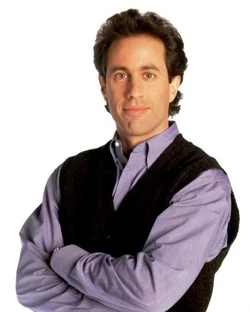
One last point: This "thing" or strategy that you can do for your productivity is not really original to me. In fact, it is basically what is commonly known as the Seinfeld method, made famous by Jerry Seinfeld, who would write an X on his calendar every day that he wrote some comedy. Thanks, Mr Seinfeld. Great idea.

Sunday, July 09, 2017

How to Read More Books: The Lake Wobegon Method

A month or two ago, I was becoming very frustrated with myself because I couldn't seem to make any progress on the books that I was trying to read. Since I have many books on my want-to-read list and I consider reading to be an important, productive, and enjoyable activity, this was bothering me a lot.

Fortunately the reason for my problem was staring me in the face every day. Or perhaps I should say, I was staring at it. The reason I was making little-to-no progress on my books was that I was listening to too many podcasts and watching too many videos on youtube. These three activities--watching youtube, listening to podcasts, and reading books--are three of my favorite activities, so this shouldn't be too surprising.

But why were podcasts and youtube completely blocking out my reading time? Once again, the answer was clear. In my head I might have said, "I don't have time to read because there are so many videos that I want to watch on youtube and there are so many podcasts that I want to watch." Actually, this was only a superficial answer. The real answer was, youtube and podcasts were blocking out my reading time because they are endless. So I learned an important lesson:

Beware of activities that are endless.

Such activities will suck up all of your free time--if you let them.

So I set myself some new rules.
- When you want to go on the computer, first read a book.
- Alternate days between podcasts and audiobooks.

These two rules have greatly accelerated my reading pace. I've been making good progress on three books that I'm reading: The Happiness Advantage (audiobook), Designing Your Life, and a physics textbook that I want to finish before teaching physics again. This is really satisfying, because each of these books has an end that I see myself gradually closing in on, unlike youtube videos and podcasts, which are, as I said before...endless.

Lake Wobegon Method

So, what is the mysterious "Lake Wobegon Method." Actually, what I described above was an example of it. Note: I didn't invent the Lake Wobegon Method. It's an adaptation of the Lake Wobegon Strategy invented by Google (maybe). More on that below.

Lake Wobegon is a fictional town in Minnesota that you can often hear about in the Prairie Home Companion radio show. You can also read a lot about it on Wikipedia:

https://en.wikipedia.org/wiki/Lake_Wobegon

but the part that really sticks out to me is this: "The closing words of the monologue are 'Well, that's the news from Lake Wobegon, where all the women are strong, all the men are good looking, and all the children are above average.' " (Wikipedia)

This "all above average" idea is the name-sake of the "Lake Wobegon effect": "a natural human tendency to overestimate one's capabilities" (Wikipedia). It's a psychological phenomenon (and kind of a problem). But the Lake Wobegon Method is where you turn this idea on it's head a little bit. Instead of an idea, the method is a tool:

Replace below average activities with above average activities.

What happens when you do this should be clear: the average value of your activities increases. This is a way to optimize your life. Thus, your whole life can be "above average."

Now for the Google part. In the back of my head while I was writing this, I new that this was similar to what Google uses for hiring. I did a quick search (on Google) and found this article:

https://research.googleblog.com/2006/03/hiring-lake-wobegon-strategy.html

which describes their strategy of "only hire candidates who are above the mean of your current employees." What's the purpose of this? To raise the average skill of the employees working there. Now this article is from eleven years ago, so probably their hiring strategies have changed, but still, it seems like it's a good strategy if you can successfully accomplish is. So my Lake Wobegon Method is an adaptation of the Google hiring strategy (which I definitely read about a while ago).

In closing, thanks for reading to the end of this long article. Go forth and raise your average.

How to subscribe to this blog

I realize that Blogger does not make it easier to subscribe, so I'm working on ways for that to happen. For now, if you are interested in following my writing, subscribe to me on Quora:

https://www.quora.com/profile/Adam-Kauk

Or send me a personal message on Quora.

PS: I welcome your questions on Quora as well. Sometimes these inspire what I will write here on my blog. If you mention the blog, I will be much more likely to answer your question.